
The Most Common Reason: Flat Batteries
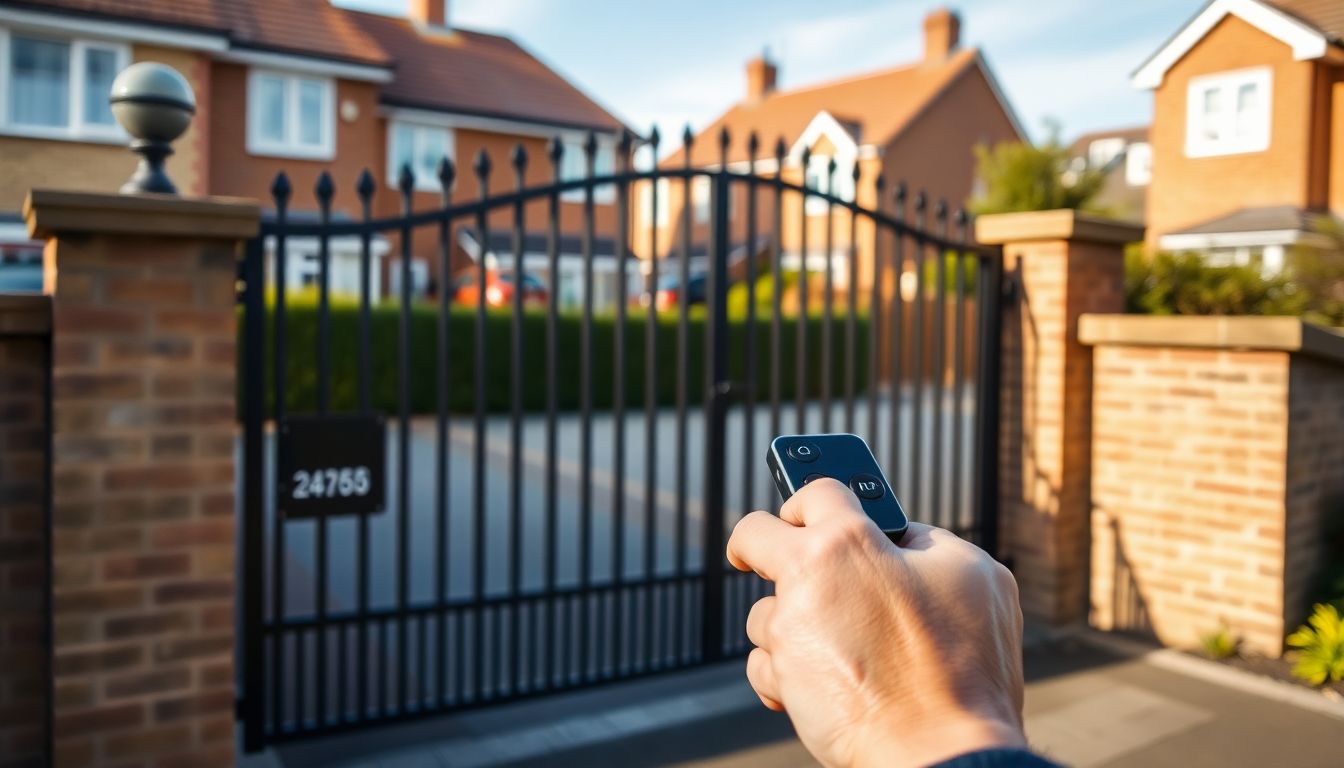
It sounds obvious, but flat batteries account for the majority of gate remote callouts. Most UK gate remotes use CR2032 or CR2025 coin cell batteries that last between one and two years depending on usage. If your remote has gradually lost range over a few weeks — working only when you are right next to the gate — the battery is almost certainly the culprit.
Replacing the battery is straightforward. Pop open the case (usually a slide or snap-fit design), note the orientation of the old cell, and slot in a fresh one. Avoid cheap bulk batteries from unknown brands — they often deliver lower voltage, which means your remote works inconsistently even when 'new'. Stick with reputable brands like Panasonic, Duracell or Energiser.
If a fresh battery does not solve the problem, the issue lies elsewhere.
Signal Interference and Range Problems
Gate remotes typically operate on 433MHz or 868MHz radio frequencies. Both bands are shared with other household and commercial devices, and interference is more common than most people realise.
Common interference sources include LED lighting (some cheap LED drivers emit significant radio noise on 433MHz), nearby smart meters, baby monitors, car key fobs, and even neighbouring gate systems on the same frequency. If your remote works intermittently — fine in the morning but unreliable in the evening — interference from lighting or appliances cycling on and off is a likely cause.
Try the remote from different positions and distances. If it works consistently from one side of the drive but not the other, something is blocking or reflecting the signal. In some cases, switching the receiver to a different frequency (868MHz is generally less congested in the UK) resolves persistent interference problems.
Remote Lost Its Programming
Most electric gate receivers store remote codes in non-volatile memory, but power surges, electrical storms, or a drained backup battery in the control panel can sometimes wipe the stored codes. When this happens, the gate receiver no longer recognises your remote — it is as if you are pressing a stranger's remote.
Reprogramming is usually a simple process: put the receiver into learn mode (often a button on the control board or a small switch), press the remote button, and the receiver stores the new code. The exact procedure varies by manufacturer — FAAC, CAME, Nice, BFT, and Hörmann all use slightly different learn sequences.
If you have multiple remotes, they all need to be reprogrammed individually. If reprogramming fails, the receiver board itself may be faulty and will need replacement by a qualified technician.
Weather and Physical Damage
UK weather takes its toll on gate electronics. Water ingress into the receiver housing is a frequent cause of remote failure, particularly after heavy rain or frost. Condensation inside the control panel can short the receiver circuit board, rendering it unable to pick up any signal — not just your remote, but all remotes and keypads.
Check the receiver housing for signs of moisture. If you find water, the unit needs to be dried out, sealed properly (weatherproof gaskets degrade over time), and the board inspected for corrosion. A technician can also check whether the antenna cable is intact — rodents and weather damage to the aerial are surprisingly common.
On the remote itself, cracked cases and corroded battery contacts from drops or moisture exposure will cause intermittent failures. If your remote looks battered, replacing it entirely is often more reliable than continuing with a damaged unit.
When It Is Not the Remote
If none of your remotes work, and the keypad and intercom also fail to operate the gate, the problem is not the remote at all. The issue lies with the gate system — usually the control board, the motor, or the power supply.
Check whether the gate works on manual release (most systems have a physical key release). If the gate moves freely by hand, the motors are probably fine and the control board may be at fault. If the gate is stiff or stuck, you may have a mechanical obstruction or motor failure.
Power supply problems are also common. Check your consumer unit for a tripped breaker, and verify the gate is receiving mains power. A failed transformer or fused circuit board will stop the entire system, not just the remote function.
BS EN 12453 and Safety Checks
If your gate has been non-operational for any length of time, BS EN 12453 (the UK standard for gate safety) requires that safety devices are verified before the gate returns to automatic operation. This includes checking that photoelectric safety edges are working, that force limitation is correctly set, and that the gate reverses on contact as expected.
A gate that has been stuck open or closed for days may have shifted on its hinges or tracks, which can affect the safety settings. Do not assume everything works as before — have the safety systems checked by a qualified installer. Automated Doors and Gates can carry out a full safety inspection and ensure your gate is compliant and safe to use.
Having Trouble with Your Gate Remote?
Automated Doors and Gates diagnoses and repairs remote control problems across the UK. Whether it is a simple battery swap, a reprogramming issue, or a receiver fault, our engineers can get your gate working reliably again. Contact us for a fast, professional service call.